Programmatic SEO AI Guardrails That Prevent Thin Pages

Programmatic SEO with AI sounds great on paper, and that catch matters more than it seems. Teams can publish hundreds or even thousands of pages quickly. Rankings rise, traffic grows, and short runs of wins follow. Many teams learn the hard way that speed without guardrails creates thin pages and duplicate content that don’t perform or last.
What makes the difference is structure and real human judgment in modern programmatic SEO with AI. Not optional, in my view. Search engines don’t reward mass output anymore; they care more about usefulness and trust over time. Governance can matter as much as the generation step.
So what helps? This guide walks through practical guardrails for agencies and in-house teams. It also shows how hybrid AI‑human workflows protect EEAT and build topical authority SEO, lowering the risk of pages that go nowhere.
Why Programmatic SEO Fails Without Guardrails
Most programmatic SEO failures follow a familiar pattern. Teams lean hard on templates, which makes sense, but keywords get swapped without any real thought behind them. The meaning doesn’t go deeper. The result feels flat. Pages exist because they can, not because someone is truly looking for that exact answer. That’s usually where things start to fall apart.
Recent studies suggest AI-generated content can rank just as well as human-written content when the quality is solid (Averi AI), and that kind of research helps set performance benchmarks. Honestly, AI writers aren’t the real problem. It’s how teams use them, the guardrails they put in place, and what slips through without review, you’ve likely seen this happen.
When AI runs without checks, issues show up fast:
- Thin explanations and repeated wording spread across large page sets, often more than teams expect.
- Pages hit keywords on paper but miss what the searcher actually wants, usually due to broad templates.
Google has been clear about this. Shortcuts don’t last. Clean structure and real usefulness matter more, especially during core updates. The same thinking usually applies to AI content strategies.
You don’t need to create bot-only Markdown or JSON clones of existing pages just to be understood by LLMs. Clean HTML works just fine.
Structural Guardrails That Protect Scalable SEO Content
Scalable programmatic SEO with AI usually succeeds or fails on structure, not prompts, and that’s the part that often trips people up (I think). Not every template needs to exist. What tends to work best is simple: one clear intent per page, with clear differences between URLs so pages don’t blur together. That often leads to content that’s shorter, tighter, and very intentional about layout; no fluff, no filler.
In practice, strong structural guardrails often look like this:
- One validated search intent per template, with intent mapping done before scaling. Skip this step and you’ll usually feel it later.
- Enough unique data on each page, often three to five points, plus required sections that add context instead of repeating definitions. Depth usually matters more than length.
This is where many SEO content writing services struggle, in my view. Volume is easy to see, so they chase it, but intent work is what keeps pages useful.
For teams building topical authority SEO, the stakes get higher once scaling starts. Search engines tend to judge clusters as a whole, and when programmatic pages feel interchangeable, authority often fades over time. We covered this process in more detail in the SEO Content Writers: Topical Authority Playbook. Moreover, you can find complementary strategies in the Search Intent Alignment Strategies: Turning Data into High-Performing Content.
AI Content Governance and Human Editorial Control
AI content governance usually isn’t about slowing teams down. It exists to set clear boundaries around what AI can do on its own and where human judgment needs to step in. These lines are simple and practical, and they often save time rather than waste it. From my perspective, this kind of clarity helps teams move faster overall, and you can see it in day‑to‑day work.
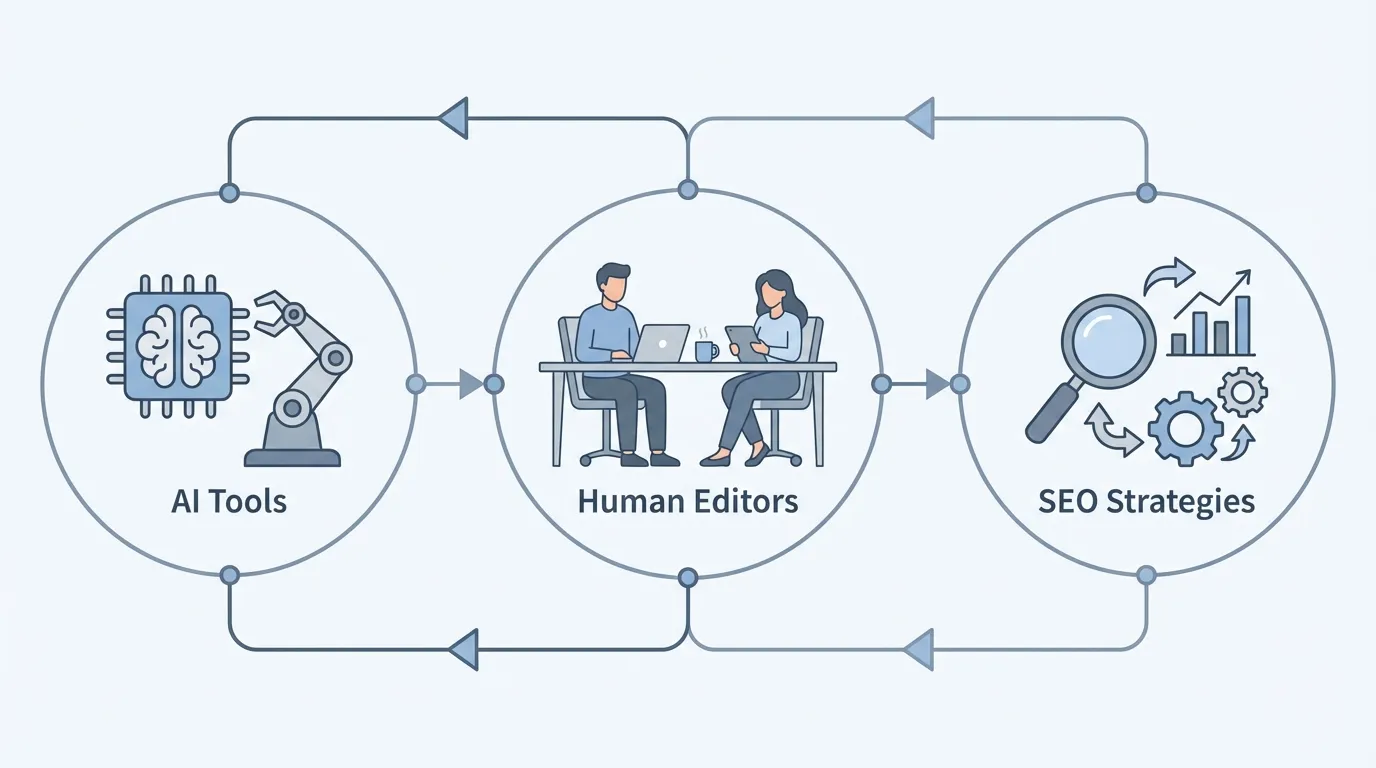
What’s interesting is how most all‑in‑one SEO workflows already work this way. AI usually handles the first draft, which makes sense. The real calls happen after that. Editors review facts, adjust tone when something feels off, and check that pages follow SEO basics like keyword use and internal linking. These are brief check‑ins guided by human judgment. This setup is common across leading SEO content writing services because it works in real situations, not just in theory.
Industry data points in the same direction. 86% of SEO professionals already use AI, and 65% say results improved after adoption. Even so, content is almost always reviewed before publishing, often more than once. This pattern shows up again and again in industry research (SeoProfy).
Typical governance guardrails include:
- Required human review before publishing (with clear ownership)
- Defined E-E-A-T guidelines around sources, expertise, and intent
This shift matters when hiring SEO content writers. Writing is only part of the role now. Managing AI output and knowing when to step in, usually during fact checks or final edits, matters just as much. That change is covered in more detail in the Beginner’s Guide to Hybrid AI-Human Content Workflows.

Avoiding Low-Intent Pages in AI SEO Systems
AI Overviews cutting organic clicks by as much as 58% on some queries has changed the stakes, as reported by Position Digital. In real terms, that shift makes low‑intent pages more expensive than they first appear. They still get indexed, but then they often just sit there doing nothing, which most teams have run into at least once.
What usually works isn’t trying to dodge AI detection. Going after detection tricks can sound appealing, but it rarely helps rankings and often just wastes time (most of us have tried that already). What matters more is whether a page actually matches what someone is trying to figure out right now.
Pages that perform answer a real question from start to finish and help with a real, sometimes very narrow, problem. That’s why many SEO teams now build for answer engines instead of classic blue links, with less fluff and less guessing. When templates can’t support real answers, scaling them often causes more harm than good, as we explain in Search Intent Alignment for AI Content in 2026.
I’ve seen companies try to build programmatic SEO systems with thin data sets, and it never ends well.
Need Articles That Sound Human, Not Robotic?
The Bottom Line for Scaled SEO Content
The real benefit shows up when programmatic SEO with AI is handled with discipline. Guardrails help protect a site and brand by keeping rankings steady instead of sliding month by month. AI often speeds up keyword research and helps with first drafts, saving hours. But quality and intent still belong to people: the human check, the edits, the judgment. In my view, trust grows through that review process.
What holds up at scale is value-first thinking: clear answers, useful structure, and accurate intent matching. Volume usually follows. One helpful approach is building templates with a clear job, paired with real AI governance rules. You’ll see that experienced SEO writers who understand strategy, and aren’t afraid to edit hard, make the difference. That’s how pages earn their place and turn programmatic SEO with AI into a steady, long-term advantage.